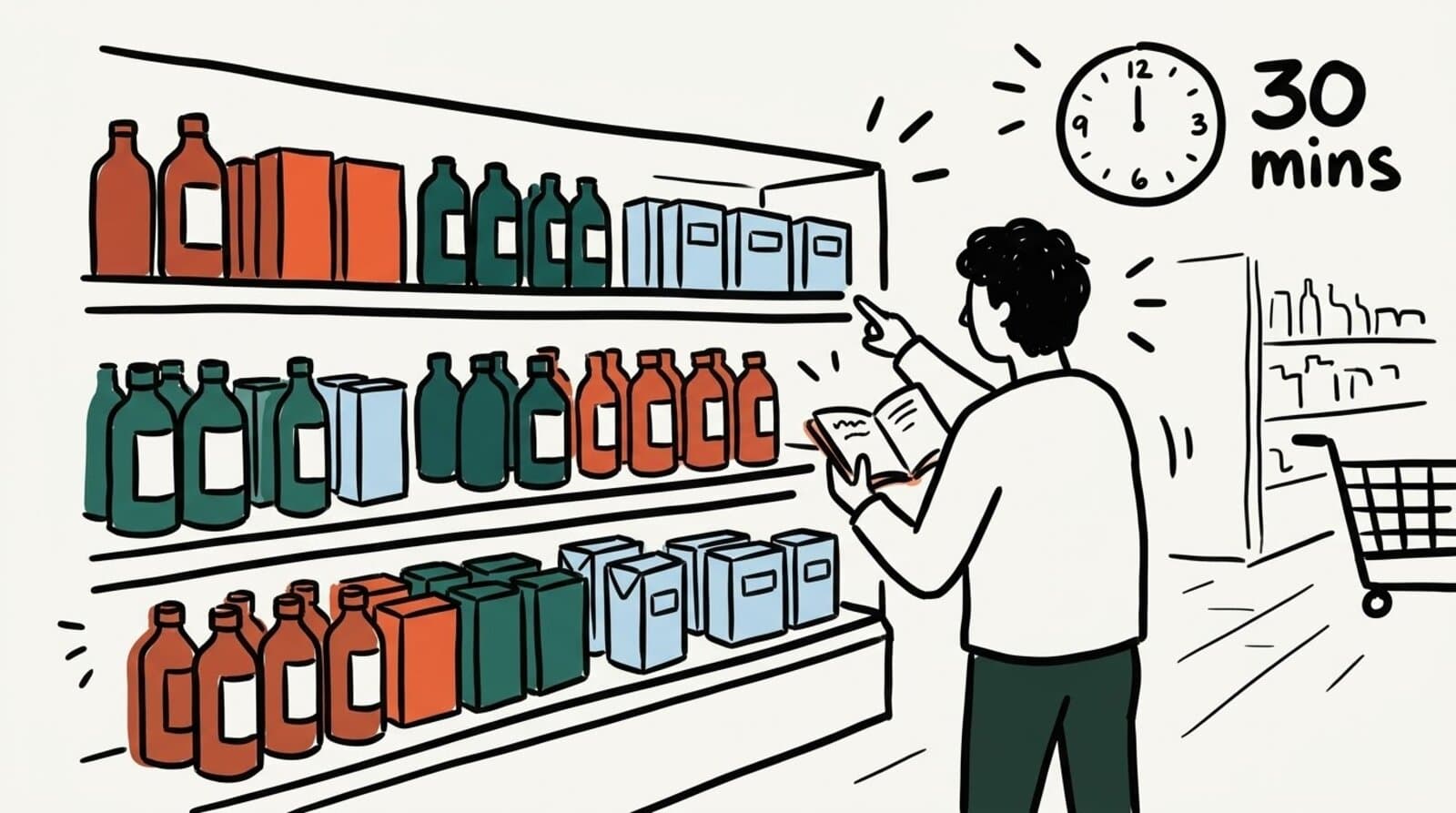
You can learn a lot about your brand from a spreadsheet, from asking ChatGPT, from spending a few minutes on the socials. But, if you really want to see the product in the wild, just half an hour in the aisle shows you much more than you might think.
When I was on the buyer's side of the desk, the suppliers worth listening to had usually been in store that week. They talked about what was happening in the category generally, evidenced by what was actually there. This was helpful for me and gave a soft segue into talking to their brand's current place.
A store visit shows you what the store has executed vs what the buyer intended. Both are important and don't assume they'll match; they should, but often don't for many reasons. Ultimately, it shows what a shopper sees when they reach your bit of the aisle. Your sales data shows you how many people bought but being in front of the fixture in stores is where the rubber hits the road.
This is the checklist I use, in the order I walk it. It's for brand owners who are already listed, or about to be.
TL;DR
- Every store is merchandised differently to account for size, demographics, main customer mission etc so expect variations between stores.
- What you see is the combo of what a buyer has decided, plus how a merchandiser believes makes sense, plus how the store executes.
- Visit two or three stores of different sizes, mid-week and at peak times, with a notebook. Ask the duty manager before you take photos.
- Start with your own line: is it there, how many facings, which shelf and what price. Then read the bay around you: the price ladder, your neighbours, gaps, own label and promotions.
- About 31% of grocery spend goes through promotions in the UK, so note how deep and how often deals run. You can do this online too but sometimes there can be store-only promotions.
- One store is one store. Go back monthly, write each visit up, check it against your sales and take the patterns to your next buyer meeting.
- Avoid three mistakes: rearranging the shelf, bringing complaints without fixes, and only looking at your own line.
What a shelf can tell you.
Every shelf starts as a plan, and three sets of people shape it before a shopper sees it.
The buyer chooses the master assortment and roughly how much space each product gets, mostly on the sales and profit each one makes for the space it takes up.
The merchandiser then turns that into a planogram: the shelf plan each store is meant to follow, fitted to its fixtures.
The store team then fills the shelf and keeps it filled.
What you see in the aisle is all three together. The buyer's part arrives with a lag: space mostly changes at range reviews, so a facing you lose this month usually reflects sales from months before. The store's part can change from one week to the next.
Figure 1
Two views of the same brand
| Your shelf shows you | Your sales data shows you |
|---|---|
| What the buyer decided and how the store carried it out: range, space and position | How many units sold, by store and by week |
| What a shopper sees: price, pack, neighbours and deals | Who bought and whether they came back, if you buy shopper data |
| Problems in store: gaps, wrong labels, damaged packs | Whether those problems cost you sales |
| One store, on one day | Every store, over weeks and months |
A visit tells you where to look in the data. The data tells you whether what you saw cost you anything.
Prepare before you go.
- Pick two or three stores of different sizes. Retailers plan shelves by store cluster, grouping stores by size, local shoppers and main shopping mission (a quick top-up or a big weekly shop).
- Go mid-week, mid-morning. Shelves have usually been filled overnight, so a gap is more likely to be a real availability problem than a busy weekend.
- But also go at peak times. This is where you'll find out whether you've got the right stock weight or not.
- Take what you agreed with the buyer: which lines are listed, how many facings each and which shelf if you have it. You probably won't though.
- Find the duty manager and tell them who you are. Most are happy for you to photograph your own products. Ask before you photograph anything else.
- Bring a notebook or a notes app. You're counting, so write the numbers down there and then. AI tools that record your ramblings can transcribe what you're saying into good notes so consider setting one up (for what it's worth, I like Wispr Flow).
The 30-minute route.
I walk it in the same order every time, so one visit compares with the next.
Figure 2
Where the 30 minutes go
- ApproachAisle ends and displays
- Your own lineAvailability, facings, shelf, price
- The bay around youPrice ladder, neighbours, own label, deals
- Step backThe three-second test
Approach: 0 to 5 minutes
- Aisle ends and displays. Note who has the aisle ends and any extra displays in your category. That space is often paid for through promotional funding, but it's also used to manage stock weight where there isn't enough space to hold it in the regular spot in the aisle. Waitrose runs a 'new brands' in-aisle space, so check that out if you're ranged there (or not!).
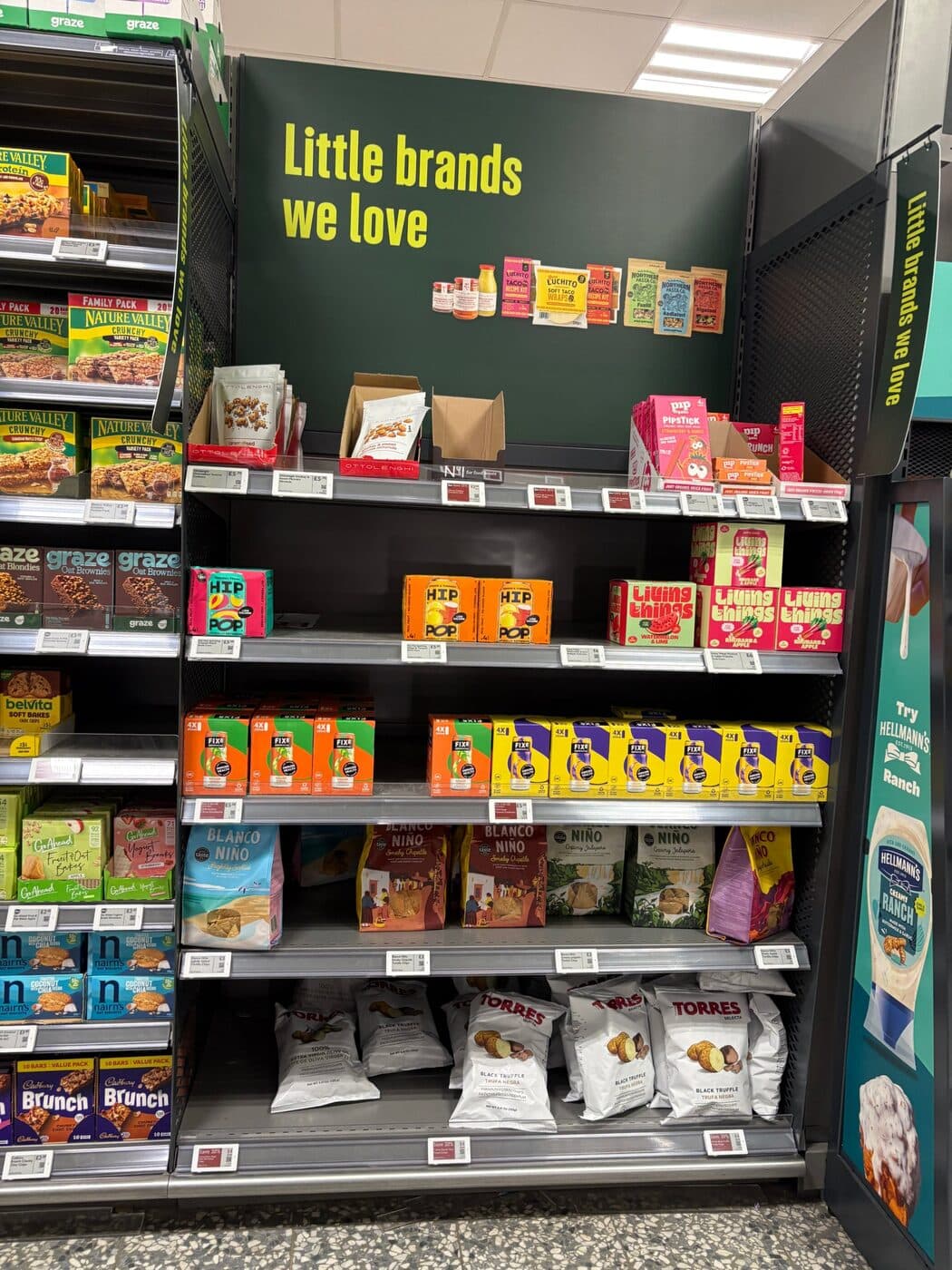
Your own line: 5 to 15 minutes
- Is it there? Check every line you're listed for. A gap with a shelf-edge label (SEL) above it usually means out of stock. No label can mean the line isn't ranged in that store, or the label has gone missing. A gap costs you sales either way, and the buyer sees the drop in rate of sale long before anyone explains it.
- Facings and shelf. Count your facings and note which shelf you're on, then compare both with what you agreed. Eye level and the shelf just below tend to sell most. The bottom shelf mostly sells to shoppers who already know what they want.
- Price and label. Is the shelf price what you expect? Is the promotion label right, or has last month's been left up? Check the unit price on the SEL against your neighbours too. Shoppers compare it even when you don't.
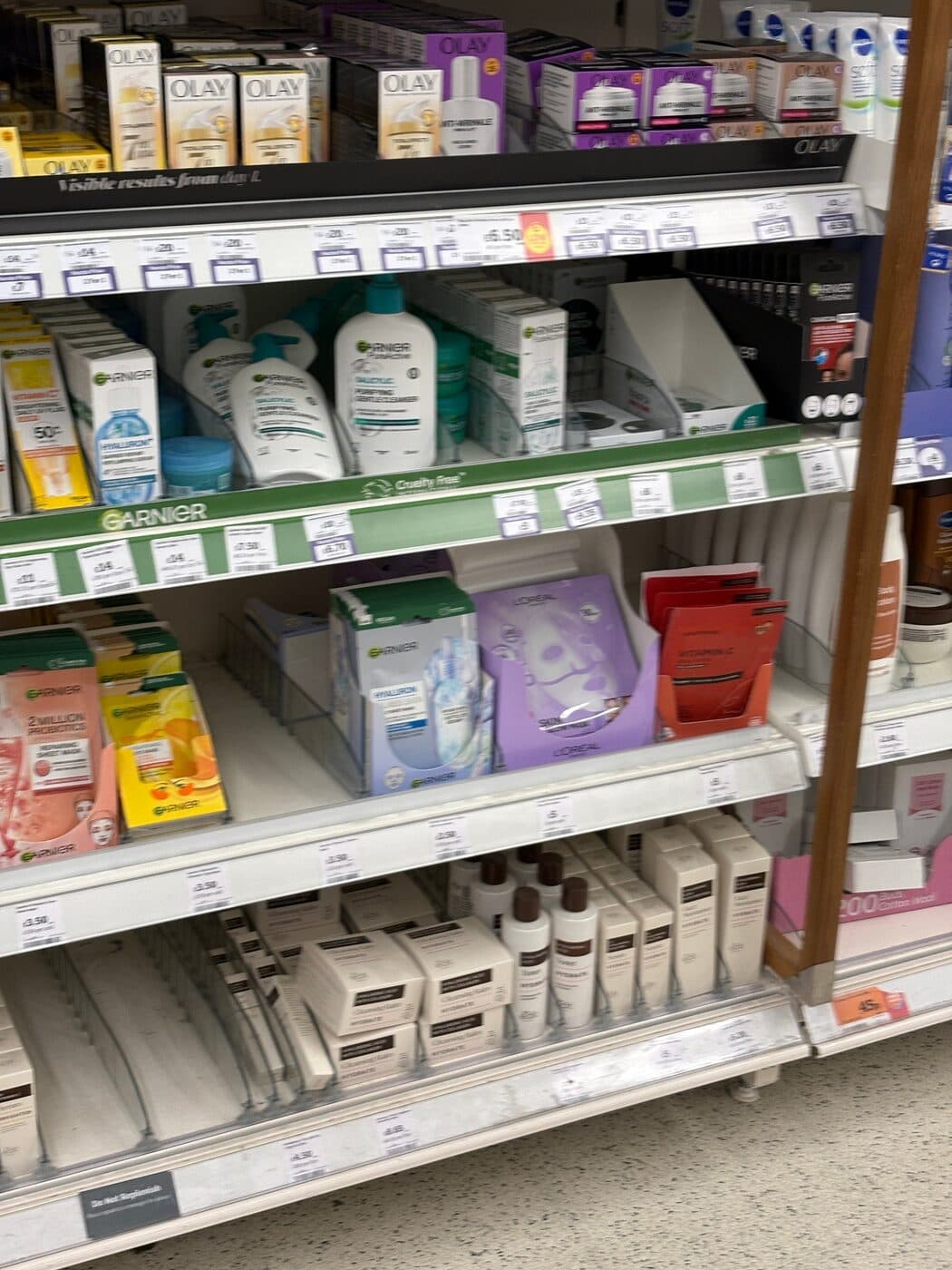
The bay around you: 15 to 25 minutes
- The price ladder. Write down the price of every product in your segment, cheapest to dearest. Where do you sit? Look for a crowded price point and an empty one. When a buyer needs to free up space, a crowded price point is where they look first. However, look at the absolute price AND the price per kg, per litre and so on. This often tells you more than the price on shelf.
- Your neighbours. Buyers compare your rate of sale with the products either side of you. Those are the lines you're up against at the next range review, so note their price, pack size and whether they're on deal. Note any gaps in their lines as well. A competitor that's out of stock can flatter your sales that week, so it's worth knowing when you read the data.
- Own label. Is the retailer's own label next to you, matched on pack and price? Premium own-label sales grew 11.1% in the four weeks to 9 August 2026, their fastest growth since March. Aldi and Lidl, where most of the range is own label, now take 19.1% of grocery spend between them. If an own label pack has moved in beside you, it could mean a few things. Don't panic, but make a note of it. Check the specification and price against your product.
- Promotions. Count how many products in the bay are on deal, how deep the deals are and whether the same ones were on deal last visit. Check the retailer's website before you go so you know what's running nationally, then look for deals that only run in store. About 31% of grocery spend went through promotions in the four weeks to 9 August 2026, so a deal on its own tells you little. A product on a deep deal every time you visit has a shelf price nobody pays.
Step back: 25 to 30 minutes
- The three-second test. Stand a few metres back from the bay. Can you find your brand in three seconds? When packs in a category all look alike, shoppers fall back on price or on the brand they already buy.
Sources: Worldpanel by Numerator via ESM Magazine (four weeks to 9 August 2026) for promotions and premium own label; Worldpanel by Numerator via Retail Times (12 weeks to 4 October 2026) for Aldi and Lidl share.
What one store can't tell you.
Stores don't always follow the planogram, especially just after a reset or when they're short-staffed. One untidy store might just be a store problem, and it says little about how the retailer sees you.
So visit two or three, and go back. The same stores, in the same order, every month, with dated photos, turn a set of impressions into a record you can compare.
Then check what you saw against your sales. If a store had a gap, did its sales dip that week? If you lost a facing, when did your rate of sale change? Sometimes the answer is nothing, and that's worth knowing too.
Taking it to the buyer.
Write a short note after every visit: what you saw, what you think it means and what you'll do about it. A simple table does the job.
Figure 3
A visit note
Illustrative template. One row per line, per store.
| Store | Line | Facings agreed | Facings seen | Shelf price | On deal? | What it means, what I'll do |
|---|---|---|---|---|---|---|
| [Large store] | [Line A] | [X] | [X] | £[X] | [Yes / No] | [e.g. gap under SEL: check DC orders for this store] |
| [Large store] | [Line B] | [X] | [X] | £[X] | [Yes / No] | [e.g. own label moved alongside: compare price and pack] |
| [Small store] | [Line A] | [X] | [X] | £[X] | [Yes / No] | [e.g. not ranged here: confirm store cluster list] |
Take the patterns, with photos, into your next buyer meeting. Lead with what you're fixing on your side, such as forecasting, case sizes or deliveries to the DC (distribution centre), before you ask for anything from the store side. Also give observations about the category generally, without expectation. This is often very well received by a time-poor buying team.
Mistakes to avoid on a store visit.
- Rearranging the shelf. Tidy your own stock if the store is happy for you to. Never move a competitor's products or take their facings. Store teams notice, and word gets back to the buyer.
- Bringing complaints and no fixes. "Your stores never have us in stock" lands badly. Show the buyer the gaps, then show what you've already changed on your side.
- Only looking at your own line. Range reviews are decided across the whole bay. Spend at least half your visit on everyone else.
So, what will 30 minutes tell you?
Enough to ask better questions. You'll see what the buyer decided for your brand and how well the store carried it out, what a shopper sees at the shelf and how you stack up against your neighbours and own label.
Do it in two or three stores, write it down and check it against your sales. Then take what you found, and what you're doing about it, into your next buyer meeting.